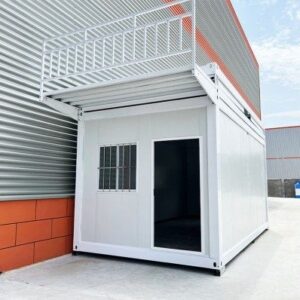
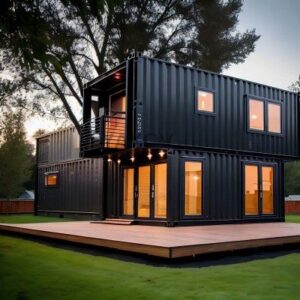
When people search for “what is a container home,” they usually want more than a dictionary answer. In practice, a container home is a residential or commercial living space built from steel shipping containers or from factory-made modules that follow the same structural logic. The core idea is simple: you start with a steel structure, add insulation, plumbing, electrical, windows, doors, and finishes in a factory, and then deliver a nearly complete home to the job site.
Because so much work happens indoors at the factory, quality is more consistent than on many traditional job sites. That is why, when homeowners ask what is a container house or what are container homes in real life, professionals often describe them as one branch of modern modular housing rather than just “boxes turned into rooms.” For buyers comparing real-world models, the 20ft container house is often the first reference point.
How Container Homes Work in the Real World
To understand how container homes work, it helps to look at a job-site example. On a windy site outside Houston, a crew received two factory-finished modules on flatbeds early one morning. The modules already had wiring, plumbing rough-ins, insulated walls, and interior finishes completed. The team spent the first hour placing concrete pads, then a crane lifted each unit into position. After that, they bolted the frames together, connected utilities, sealed the joints, and performed safety checks. By evening, the clients walked through a fully functional one-bedroom container home.
On another project in the Philippines, a portable home for a small resort was installed in less than ten hours, even though heavy rain stopped conventional masonry work nearby. Instead of weeks of bricklaying and wet trades, the resort owner relied on a prefab container house that arrived 90% finished, with only local connection and landscaping left to do. Many resorts now prefer working directly with a prefab container home manufacturer to reduce downtime and improve build quality.
Real Buyer Consultation Example
A buyer from Arizona once reached out and asked, “I keep seeing photos online, but what is a container home really like to live in, and will it stay cool in summer?” After reviewing the site location and climate data, the factory recommended upgraded wall insulation, Low-E double glazing, and a small split AC system. The team shared a detailed cost sheet, including structural work, interior finishes, and delivery. Because the system was modular, the quote was easy to understand, and the buyer could clearly see how each option changed the total price.
Another customer from Florida wanted to know whether a prefab container house could handle coastal conditions. The engineering team explained how zinc-aluminum coated steel, marine-grade paint, and sealed joints protect the shell from salt air. That consultation turned a skeptical inquiry into a confident purchase, and the client later expanded the project with an extra studio module.
Types of Container Homes and Layout Options
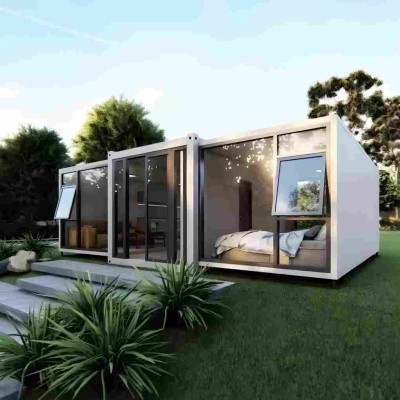
When people ask what is a prefab container house, they are often surprised by the range of designs available. There are single 20ft units used as tiny homes or offices, 40ft homes with one or two bedrooms, multi-module layouts that combine several containers, expandable units that fold out on site, and hybrid designs that mix container frames with insulated sandwich panels. These options cover everything from minimalist container living to larger eco-friendly prefab homes that feel similar to conventional houses.
In many markets, suppliers now treat container homes as part of a broader modular housing family. That means buyers can choose from different facade styles, roof forms, and interior layouts while still benefiting from the speed and predictability of factory construction.
Price Overview: How Much Do Container Homes Cost?
Anyone asking what is a container home usually asks about price next. Costs vary by region, finish level, and design, but certain patterns show up in most markets. Entry-level units focus on basic comfort and durability, while higher-end models offer premium finishes, larger floor plans, and advanced energy features. For detailed pricing logic, many buyers refer to a container home cost guide to understand regional differences.
| Size / Type | Typical Price Range (USD) | Common Use |
|---|---|---|
| 20ft basic unit | $6,000 – $14,000 | Studio, office, site cabin |
| 40ft standard unit | $12,000 – $28,000 | One- or two-bedroom home |
| Multi-module home | $25,000 – $80,000+ | Family homes, rentals |
| High-spec eco model | $40,000 – $120,000+ | Eco-friendly prefab homes |
According to recent modular housing market reports from 2024 and 2025, container-based homes often come in 20–40% below comparable site-built houses in the same region, especially where skilled labor costs are high. However, land, permits, and utility work still need to be factored into the total budget.
Regional Pricing Differences
While defining what is a container home, it is important to understand that the same design can cost very different amounts in different regions. In the United States and Australia, labor and permit costs push prices higher, whereas Southeast Asia offers more competitive factory pricing. In the Middle East, stricter insulation and fire-safety requirements add cost but also improve performance in extreme heat. Europe tends to have demanding energy codes, so wall systems must meet higher thermal standards.
| Region | Typical Cost Level | Key Driver |
|---|---|---|
| United States | Medium to High | Labor, permits |
| Southeast Asia | Low to Medium | Factory capacity |
| Middle East | Medium to High | Insulation and cooling |
| Europe | Medium to High | Energy codes |
Technical Specifications of a Typical Container Home
A clear answer to what is a container home should include its technical makeup. Modern designs rely on engineered steel frames, insulated wall systems, and certified electrical components. Many manufacturers follow international or regional standards for structures, insulation, and fire safety.
| Category | Common Specification |
|---|---|
| Main frame | Q235 or Q345 steel structure with anti-corrosion coating |
| Wall panels | PU or Rockwool sandwich panels, 50–100 mm thick |
| Floor system | Steel joists with cement board or plywood and finish flooring |
| Windows | Low-E double glazing in aluminum frames |
| Electrical | UL or CE compliant wiring and fixtures |
| Fire performance | Panel systems designed for A2–B1 ratings depending on project |
| Expected lifespan | 25–50 years with proper maintenance |
Industry guidelines and building science research show that properly insulated container homes can match or exceed the thermal performance of many conventional houses, as long as bridges through the steel structure are carefully managed.
Installation Steps and On-Site Work
Once a factory completes the modules, installation is relatively straightforward. First, the contractor prepares foundation pads or a simple slab. Then, delivery trucks bring the modules to the site. A crane or forklift places each module onto the supports, and the crew connects the frames, levels the units, and locks them into position. After that, electrical, water, and sewer lines are connected, joints are sealed against air and water, and final inspections are completed. On many projects, the entire on-site process takes between one and three days.
Because most sensitive work, such as wiring and interior finishes, is completed in a controlled environment, weather has less impact. That difference is one reason engineers and developers continue to invest in this branch of modular housing.
Container Homes vs Traditional Construction
When people compare options, they rarely just ask what is a container home; they also want to know how it stacks up against concrete or timber houses. In direct comparisons, container homes usually win on speed, predictability, and resource use, while traditional homes still hold advantages in hyper-customized architecture and long-established appraisal systems.
| Aspect | Container Home | Traditional Home |
|---|---|---|
| Build time | Days or weeks | Months |
| Budget control | High, factory set | Variable |
| Weather risk | Low | High |
| Waste generation | Lower | Higher |
| Relocation potential | Possible for many models | Not designed to move |
Expert Commentary and Evidence
Civil engineering researchers have been studying modular and container-based systems for years. Several recent publications report that factory-built steel modules can reduce construction waste by up to half compared with traditional methods, mainly because cutting, fitting, and storage are optimized indoors. Studies in journals focused on sustainable housing also show that modern wall assemblies in prefab container houses can match or exceed the energy performance of many wood-framed homes when designed with proper insulation and air sealing.
Market reports from 2024 and 2025 indicate double-digit growth in modular housing adoption in regions facing high labor costs, rapid urbanization, or both. That trend reinforces the idea that understanding what is a container home is not just an academic exercise; it is directly tied to how cities and rural communities are managing housing demand, budgets, and sustainability goals.
Frequently Asked Questions About Container Homes
1. What is a container home in simple terms?
It is a steel-based modular dwelling that comes largely finished from a factory and is installed on site with minimal additional work.
2. What is a container house compared to a regular shipping container?
A regular container is just a cargo unit, while a container house is engineered for people to live or work in, with insulation, finishes, and certified systems.
3. What are container homes mainly used for today?
They serve as primary homes, vacation cabins, rental units, offices, worker housing, and accessory dwelling units in many markets.
4. Are container homes considered eco-friendly?
They can be, especially when they use efficient insulation, controlled factory production, and sometimes repurposed modules or low-impact materials.
5. Do container homes rust or deteriorate quickly?
With proper anti-corrosion coatings and maintenance, the steel structure can last for decades.
6. Are container homes comfortable in hot or cold climates?
Yes, as long as the design uses appropriate insulation, air sealing, and HVAC systems tailored to the local climate.
7. How long do container homes usually last?
Many are designed for an expected service life of 25–50 years, similar to other light-structure housing.
8. Can a container home be moved if needed?
Certain portable home models can be transported and reinstalled, which is useful for remote projects and temporary housing.
9. Is financing available for container homes?
In some regions, lenders and insurers are increasingly familiar with modular housing and are more open to financing these projects when documentation is clear.
10. How much maintenance does a container home require?
Most owners need to check sealants, coatings, and drainage periodically, while interiors are maintained much like any other home.
11. Can multiple units be combined into a larger home?
Yes, combining several modules is a common strategy for creating larger family homes, multi-unit rentals, or commercial spaces.
Container Home Price Calculator (Estimate)
You can use this simple calculator to get a rough price range based on size, finish level, and region. The numbers are for illustration only and do not replace a formal quote.